Home equipment
Home appliances: compare label and cost of use
The purchase price does not describe the cost of a device used for several years. A useful comparison is similar to comparable capacity and usage models.
Quick response
Essential in a minute
Check the necessary dimensions and capacity, then the energy label consumption unit. Compare water, noise, programs, installation and maintenance. Use an electricity rate adapted to your contract to estimate an expense, without confusing this simulation with a promise of a real bill.

1. From location and use
Measure the location, passages and clearances required to open the door. Also take up the available connections and installation requirements of the manufacturer. For a built-in appliance, the niche and facade dimensions require specific control. Choose the capacity according to your actual use: a large appliance is not automatically more economical for a small fireplace. Before comparing promotions, eliminate models that cannot be properly installed or delivered to the intended room.
- Dimensions and access measured.
- Compatible connections.
- Home-adapted capacity.
2. Read label data
The energy label gives specific benchmarks for the product family, including the class and a consumption expressed according to a protocol. The QR code allows you to find the information recorded in the European database EPREL. Also compare the capacity, water or noise when these data are present. The letter alone does not allow you to compare any devices: bring together similar size and function models. Copy the numbers and their unit rather than rely solely on the color of the label.
- Exact model identified.
- Consumption and unit copied.
- Product sheet consulted.
3. Estimate a cost with its assumptions
Educational example, without a commercial tariff: to 0,25 € per kWh, one device consuming 150 kWh per year represents 37,50 € for annual electricity; a 200 kWh represents 50 €. The difference is therefore of 12,50 € per year, i.e. 62,50 In five years if consumption and price remain constant, this calculation excludes water, maintenance and price variations. 100 cycles, adjust the number of cycles to your home before multiplying by the price of kWh.
- Assumptions and written period.
- Consistency units.
- Energy distinguished from other expenditures.
4. Compare delivery and post-purchase
Ask what the delivery covers: door threshold, floor, use part or connection. Check if the old equipment is taken over, the necessary accessories and the cost of an additional passage. Find consumables, access to filters and repair information. A still usable device should not be replaced on the sole basis of an energy classification: first have the need or failure examined. Upon receipt, check the packaging, reference and parts before discarding the documents.
- Delivery level specified.
- Confirmed accessories and recovery.
- Maintenance and repair studied.
5. Moving from cycles to an annual expenditure
The label of the washing machine gives kWh for 100 eco cycles 40-60. Fictitious example: 50 kWh/100 cycles and 180 cycles per year represent 50 × 180 Φ 100 = 90 kWh/year. 0,25 €/kWh, that gives 22,50 € annual electricity, excluding water and laundry. Do not multiply 50 directly by 180 : you would forget the basis of 100 To compare two machines, keep the same number of cycles and examine their capacity; a machine too small may require you to multiply the laundry.
- Unit of label retained.
- Estimated annual number of cycles.
- Comparable capacity and program.
Compare
Compare the complete offer
| Element | What to record | Why? |
|---|---|---|
| Apparatus | Capacity and dimensions | Compare same service |
| Label | Consumption with its unit | Calculate without mixing protocols |
| Noise | Value and context of use | Preserving comfort |
| Installation | Access, connection and accessories | Avoid a cost after delivery |
Fictional example · No merchant prices
A more expensive washing machine can cost less over five years
Fictional example: two washing machines of equal capacity cost €450 and €520 including delivery. For the same reference programme, A uses 150 kWh per 100 cycles and B 100 kWh per 100 cycles. At 220 cycles a year for five years and a constant €0.25/kWh, their theoretical consumption is 1,650 and 1,100 kWh. Purchase plus electricity totals €862.50 for A and €795 for B. Water, detergent, maintenance and repairs are excluded.
| Expense item | Washing machine A | Washing machine B |
|---|---|---|
| Delivered purchase | 450.00 € | 520.00 € |
| Electricity over five years | 412.50 € | 275.00 € |
| Total of included items | 862.50 € | 795.00 € |
Calculation: kWh per 100 cycles × 220 × 5 ÷ 100 × €0.25. The result depends on the programme and usage frequency selected.
- Compare equal capacities and the same programme, keeping the unit per 100 cycles.
- Adapt annual cycles to your household and the kWh price to your contract.
- Recalculate if the tariff, usage or repair costs change.
Before you continue
Final checklist : Appliances and running costs
Check the points you actually checked. Checks stay in this page during the visit; they are not sent to the server. A checked point does not constitute a validation of the merchant.
Guide: Appliances and running costs · Révision éditoriale : 26 October 2026.
Frequently Asked Questions
Useful answers
Does the announced calculation predict my bill?
No. It estimates an expense with explicit assumptions. Your frequency of use, programs, temperature and rate can change the result. Use your contract and your own pace for a useful comparison.
Does a better class always mean less kWh?
The class interprets with the family, size and capacity of the product. To separate two devices, also read the encrypted consumption and its unit. Do not compare only two letters.
What to check before delivery upstairs?
Packaged dimensions, stairs, elevator, weight and level of service charged. Get an answer on the passage through the room; a delivery to the address does not necessarily describe this service.
To check
Reference sources and documentation
The editorial update date does not guarantee a new verification of each source. See the references for an individual situation or regulatory evolution.
- Ministry of Economy — Understanding Energy LabelLabel, fact sheet and access to EPREL. Examples of calculation of the guide are pedagogic.
- European Commission — Label of washing machinesThe kWh are expressed for 100 cycles of the eco programme 40-60. Source consulted 9 October 2026.
Putting into practice
Explore relevant shops

Continue
Other purchase guides
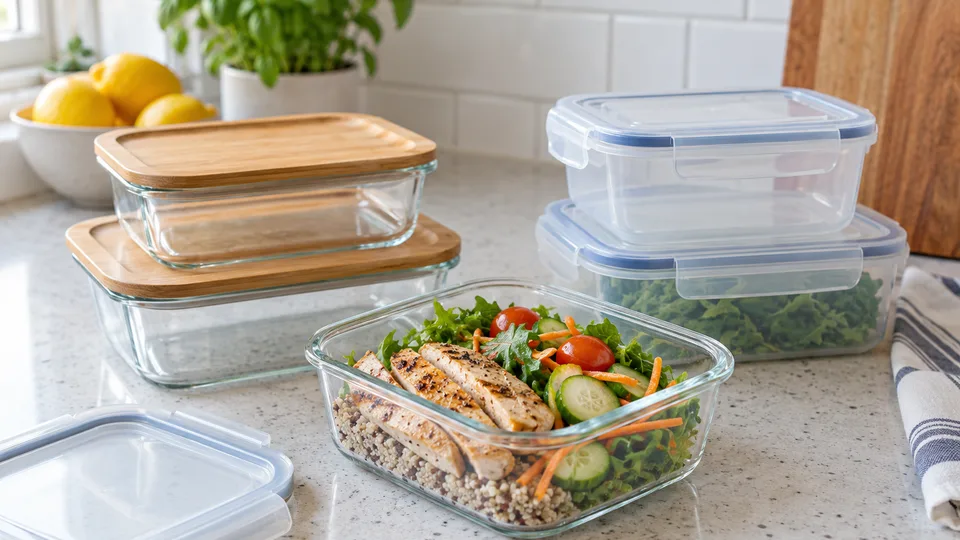
Kitchen and storage
Choose food storage containers
Compare food containers according to storage, transport, heating, temperature limits and cleaning instructions.
Read the guide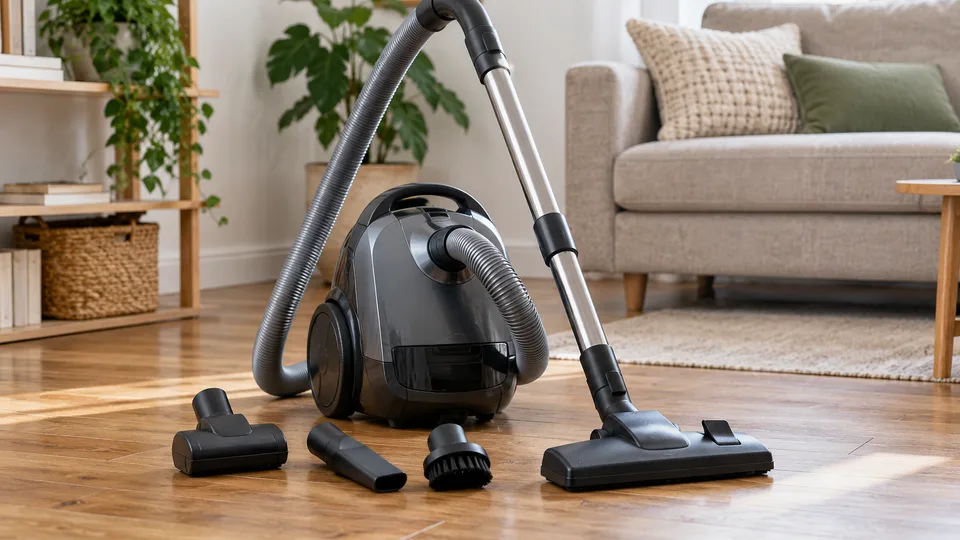
Maintenance of the house
Choose a suitable vacuum cleaner
Compare the vacuum cleaners according to your floors, stairs, accessories included, handling, consumables and maintenance instructions of the model.
Read the guide
Television and audiovisual equipment
Choose a television for your room
Compare a TV according to room, dimensions, devices to connect, applications, energy label and complete installation.
Read the guide